

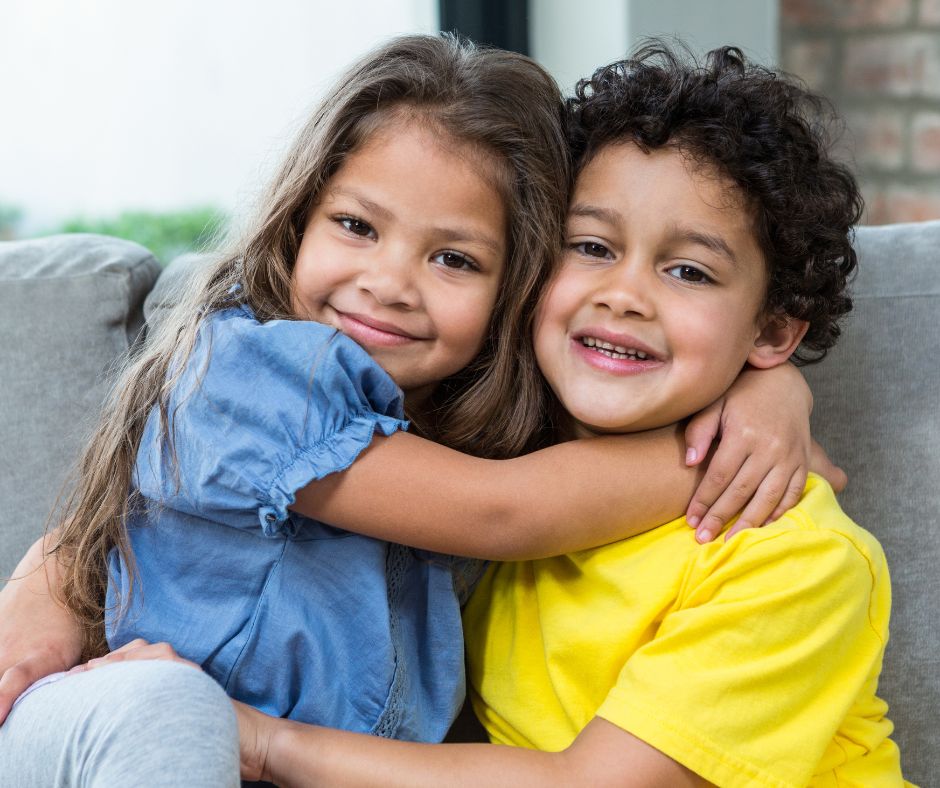
Don’t we all wish our kids just… got along?
Not perfectly. Not all the time. But enough to support each other, laugh together, and actually enjoy being siblings.
A friend of mine recently shared how hard it is in her home right now—constant arguments, tension, and hurt feelings. She told me something that stuck:
“You can’t make siblings get along.”
And she’s right—we can’t force it. But we can shape it. We can model it, guide it, and create an environment where strong sibling relationships grow naturally over time.
Because while friendships may come and go…siblings are in each other’s lives for the long haul.
Here are 3 simple, powerful ways to help your kids build stronger, healthier relationships with each other.
1. Help Them Find Common Ground
Identify Shared Interests
Siblings don’t have to be best friends—but they do need connection.
Look for small ways your kids can enjoy time together:
- playing a sport
- watching a favorite show
- cooking or baking
- doing art or music
Even small shared moments can build a foundation.
One of my favorite things we did when my daughters were younger was “coffee dates.” I’d drop them off together and pick them up later. It gave them space to talk, laugh, and feel grown up—without me in the middle.
Now that they’re older, they still do this on their own.
And today? They’re each other’s biggest supporters.
Celebrate Each Other’s Wins
Create a culture where siblings cheer each other on.
In our home:
- we make fun breakfasts on test days
- send encouragement texts
- write little notes before big events
It’s not about the outcome—it’s about recognizing effort and showing support.
We cheer each other on and celebrate milestones together. Whether it’s getting a good grade on a test, scoring a goal in a sports game, or mastering a new skill, we acknowledge and celebrate each other’s successes.
2. Teach Them to See the Good in Each Other
Encourage Genuine Compliments
It’s easy for siblings to focus on what annoys them. We have to help them notice what’s good.
Teach your kids to say things like:
- “You did a great job”
- “That was really kind”
- “You’re good at that”
And here’s the key: Never compare siblings
Comparison creates jealousy. Celebration builds connection.
When kids feel valued for who they are, they’re more likely to value each other too.
Model What You Want to See
Your kids are always watching.
When you:
- speak kindly
- show appreciation
- encourage others
They learn how to do the same.
3. Celebrate Differences (Instead of Fighting Them)
Not all siblings are alike—and that’s a good thing.
Highlight Their Strengths
Help each child see what makes the other unique:
- one may be athletic
- another creative
- another deeply thoughtful
All of those differences matter.
Encourage Empathy and Understanding
When conflict happens (because it will), guide them to ask:
“How do you think your sibling feels?”
Helping kids step into each other’s perspective builds understanding—and softens conflict.
Real-Life Example
When one of my daughters was trying out for a sport, she asked her older sister for advice.
Instead of competing…they connected.
Moments like that build lifelong bonds.
Final Thought: You Don’t Have to Force It
Siblings will argue. That’s normal.
But your role isn’t to eliminate conflict — it’s to teach them how to navigate it with love and respect.
Because when you create connection, model kindness and celebrate differences you’re not just raising kids who get along…
You’re raising siblings who show up for each other for life.
Want More Simple Parenting Encouragement?
If you’re a busy mom trying to raise kind, connected kids without feeling overwhelmed, I created something just for you:
🙌 Free 7-Day Devotional for Busy Moms
